Empowering Kenya’s Newest Organic Leaders: AOLC Cohort Celebrates Graduation
After an intensive nine-month learning journey, the Agroecology and Organic Leadership Course (AOLC) Kenya cohort gathered in Nairobi from 13–15 April 2026 to celebrate their graduation and showcase their visions for a more sustainable food system.
This second face-to-face session marked the culmination of a programme designed to bridge the gap between organic principles and practical leadership. The event brought together 19 graduates alongside local trainers Martin Kimani and Sylvia Kuria. Also in attendance were high-level representatives from the Ministry of Agriculture, the Kenya Bureau of Standards, and various civil society organisations, as well as partners from Biovision Africa Trust and IFOAM – Organics International.
- Alex Mutungi, EOA-AUC Secretariat
- Eustace Kiaril, KOAN-EOA Country Lead
- Esther Ngari, Managing Director, Kenya Bureau of Standards
- Fred Ochieng, Biovision Africa Trust
- Grace Mugo, Ministry of Agriculture/ EOA Regional Steering Committee Chairperson
- Dr. Martin Oulu, Intersectoral Forum on Agroecology and Biodiversity
- Dr. Olembo, EOA-CSC Representative
- Patricia Flores, Senior Manager – Organic Academy, IFOAM – Organics International
- Rosinah Mbenya, Pelum Kenya EOA RSC
- Shadrack Mbolonzi, Farmer Representative PGS
- Venancia Wambua, Biovision Africa Trust
From Vision to Action: The Development Plans
The heart of the three-day graduation was the evaluation of Personal Development Plans (DPs). These plans serve as the participants' roadmaps for implementing agroecological change within their own communities.
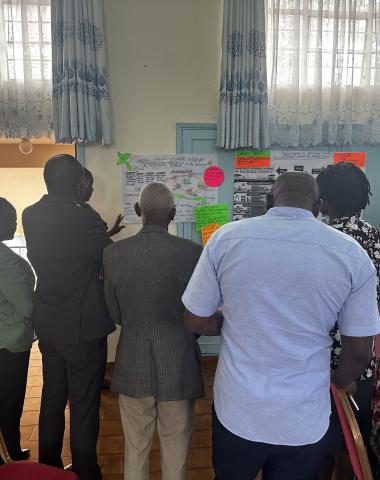
Participants presented their progress through creative poster sessions and detailed presentations, reflecting on their personal growth and the systemic impact of their work. To ensure the plans were robust and actionable, a peer-review process was conducted based on three core leadership pillars:
- Systems-Level Thinking: How the plan engages with food-system dynamics to connect local actions to a broader context.
- Transformative Impact: The extent to which the plan addresses the root causes of agricultural challenges to foster long-term change.
- Collaborative Leadership: How the leader fosters collective action, shared learning, and inclusivity within their community.
Voices from the Field
The emotional and professional impact of the course was best captured by the graduates themselves.

I’m proud of so many things that I learned in this training. Right now, I have the confidence to stand in front of a group and tell a story of my work. I’ll continue to implement my project on the ground and bring joy to my community.
AOLC Kenya participant
A New Chapter for Organic Leadership
While the formal training in Nairobi has concluded, the work of these 19 change agents is only just beginning. Equipped with new tools in advocacy, systems thinking, and community mobilisation, the graduates are now part of a global network of leaders committed to the Principles of Organic Agriculture.
By "planting seeds of change" in their respective regions, this cohort is strengthening the legitimacy of the organic movement in Kenya and ensuring that agroecology remains at the forefront of the national food security conversation.


