Fourth Agroecology Promotion Programme Steering Meeting Highlights Stronger Synergies and Collaboration
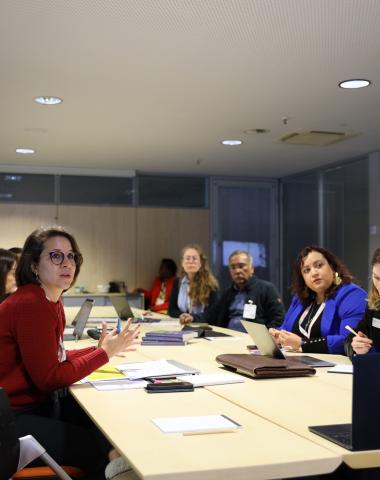
On 13 February, during the final day of BIOFACH 2026, the Agroecology Promotion Programme (APP) convened its fourth Programme Steering Committee (PSC) meeting. The session brought together programme partners to reflect on lessons from past implementation, identify opportunities for stronger collaboration, and align priorities for the coming year.
The Agroecology Promotion Programme (APP) is a global initiative that promotes agroecology as a pathway to transform towards sustainable, resilient, inclusive, and equitable food systems globally. It specifically targets Sub-Saharan Africa and four Southeast Asian countries (Vietnam, Cambodia, Laos, and Myanmar). By empowering civil society, influencing policies, and developing robust agroecological markets, APP aims to significantly enhance food security, environmental sustainability, and socio-economic resilience.
IFOAM – Organics International coordinates the overall programme, providing leadership for the Programme Steering Committee (PSC) in collaboration with the Swiss Agency for Development and Cooperation (SDC), as well as leads the Global Component of the project. The regional components are facilitated by Biovision Africa Trust in Africa, and GRET/ALiSEA for Southeast Asia.
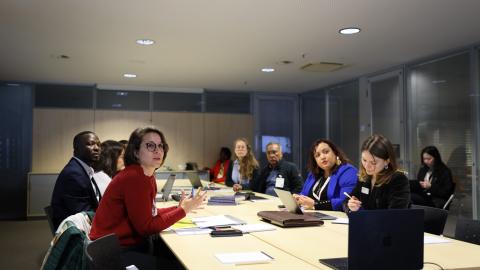
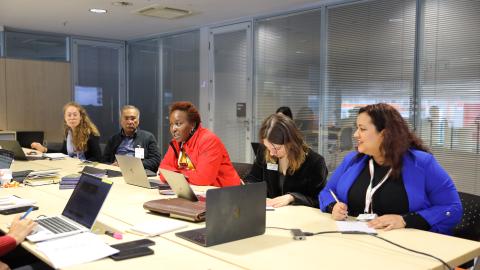
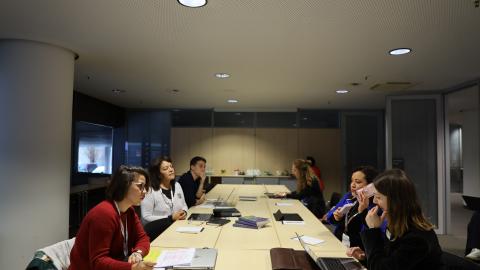
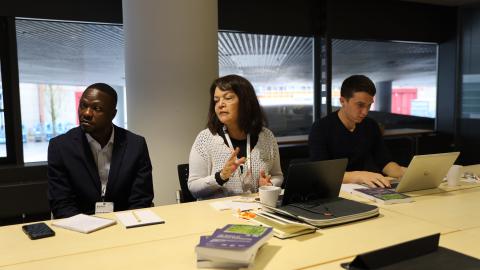
A total of 18 participants from 11 partner organisations took part in the meeting, which was held in a hybrid format. With partners from six organisations gathering in person at BIOFACH and those from five other organisations joining online, the format enabled both lively face-to-face exchanges and active remote participation. This setting strengthened the sense of connection across the programme and created space for real-time dialogue between partners working across different regions.
The meeting also marked the participation of Vivien Osele, the new focal point from the Swiss Agency for Development and Cooperation (SDC), who joined partners for the discussions and contributed to the shared reflections on the programme’s direction.
A New Structure Focused on Synergies
Unlike previous PSC meetings, which followed a more routine reporting format, this session adopted a new structure centred on identifying and strengthening synergies across programme components. Rather than focusing primarily on updates from individual organisations, partners explored how their initiatives intersect and how collaboration can be further deepened across regions and thematic areas.
This approach shifted the conversation from looking for connections to actively strengthening the “glue” between partners and initiatives. Through open dialogue and shared reflections, participants highlighted where collaboration is already generating value and where further alignment could amplify the programme’s collective impact.
The discussions emphasised several cross-cutting themes that connect the programme’s work:
- Coordination and collaborative governance across global and regional components
- People-centred leadership and capacity development, particularly for youth and women
- Financing, policy influence and scaling strategies that support agroecological transitions
By structuring the conversation around these shared themes, partners were able to reflect collectively on lessons learned, identify opportunities for joint action, and strengthen mutual understanding of how their work contributes to the programme’s broader goals.
APP Planned Activities and Key Moments Ahead
Participating partners also shared upcoming activities and planned participation in key regional and global events across the programme’s four intervention lines: youth and women empowerment, policy engagement, finance, and capacity building.
In 2026, partners will continue to the strengthen leadership and participation of youth and women in agroecology movements through regional exchanges, advocacy initiatives, and gender-responsive engagement in policy spaces. Planned activities include participation in events such as the Regional Youth CAADP Summit in June and the Africa Women Agroecology Expo in September.
On the policy front, APP partners will advance advocacy efforts at national and international levels through policy dialogue, learning exchanges, and collaborative initiatives that strengthen the link between evidence and decision-making. These activities include policy learning engagements on CAADP, a Policy Lab on the agroecology–nutrition nexus in Nigeria in April, and coordinated participation in global policy events such as COP processes throughout 2026.
To expand financing pathways for agroecology, partners will focus on connecting grassroots initiatives with donors, financial actors, and relevant policy platforms. Efforts will also promote tools and partnerships that help mobilise greater investment in agroecological transitions. This includes engagement in events such as the African Food Systems Forum in Kigali.
In 2026, APP partners will continue to strengthen leadership and training initiatives that promote agroecological knowledge, peer learning, and practitioner networks across regions. Some milestones include the Agroecology and Organic Leadership Course (AOLC) graduation ceremonies between April and May, as well as the launch of new leadership courses in Senegal and Vietnam.
Looking ahead, partners agreed to convene the next PSC meeting in September or October to maintain momentum and continue using the platform as a space for forward-looking collaboration, shared learning, and joint planning.