Nepal Hands Over Its National Agroecology Roadmap to Government
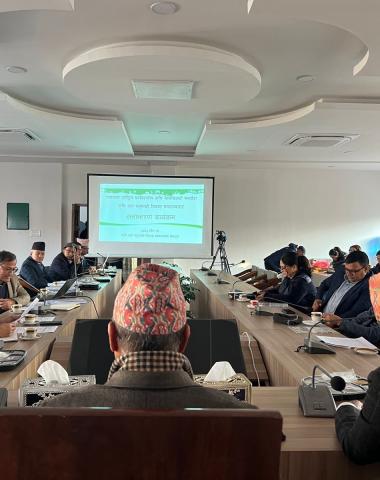
A milestone for food systems transformation under the Himalayan Agroecology Initiative
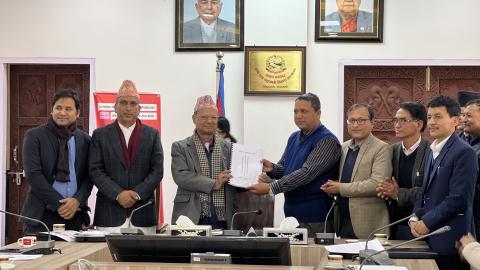
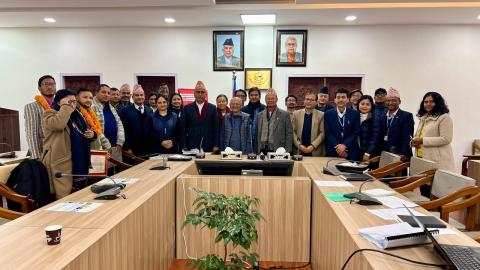
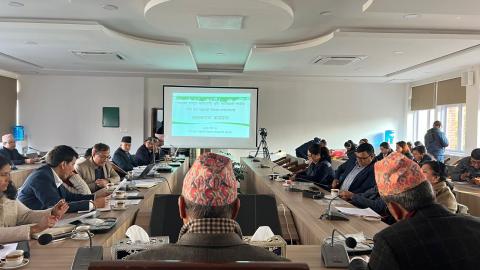
On 29 December 2025, Nepal reached an important milestone in its journey toward sustainable and resilient food systems. The National Agroecology Roadmap of Nepal was formally handed over to the Ministry of Agriculture and Livestock Development (MoALD) in Kathmandu, in the presence of Hon. Minister Dr. Madan Prasad Pariyar and MoALD Secretary Dr. Rajendra Prasad Mishra. The Ministry has formally received the document and committed to further review and consultations toward its gradual implementation.
The roadmap responds to a set of interlinked challenges facing Nepal’s agriculture sector, including climate change, biodiversity loss, excessive use of chemical inputs, land degradation, youth migration, urbanisation, and rising health concerns linked to food systems. While agriculture remains central to livelihoods, culture, and food and nutrition security, these pressures increasingly undermine the long-term viability of farming and rural communities. The roadmap positions agroecology as a long-term, science-based, and context-specific pathway suited to Nepal’s geographical, social, and economic realities.
A genuinely inclusive and participatory process
The National Agroecology Roadmap was developed through an extensive, multi-stakeholder consultation process led by a Technical Working Committee and supported by a wide range of actors across the country. Through multiple national consultations, thematic workshops, technical committee meetings, and iterative exchanges, well over 1500 people participated and contributed to the development of the document. Participants included farmers and farmers’ organisations, youth and women representatives, researchers, extension services, civil society organisations, development partners, and officials from federal, provincial, and local governments. This breadth of engagement ensured that the roadmap is grounded in lived experience while remaining firmly embedded within Nepal’s policy and institutional landscape.
LI-BIRD played a central role in facilitating and steering this process, with its Executive Director Bharat Bhandari providing sustained leadership and consistently articulating agroecology as a long-term, scientific response to Nepal’s interconnected challenges, including climate change, biodiversity loss, excessive chemical use, youth outmigration, and the degradation of agricultural land and natural resources.
The Technical Working Committee was coordinated by Ram Krishna Shrestha, Joint Secretary at MoALD, and included Bal Krishna Joshi, Chief of the National Gene Bank; Hari Bahadur K.C., Joint Secretary at MoALD; Chandra Dhakal, Chief of National Livestock Genetic Resource Centre, Department of Livestock, MoALD, Devendra Gauchan, food and policy expert; Santosh Shrestha, Seed Systems Specialist, Oxfam, Sujata Tamang, Gender and Social Inclusion Specialist, Forest Action, Nepal as well as Uddav Adhikari, Coordinator of Alliance of Agriculture and Food and Farmers’ Representative. Their combined expertise ensured that the roadmap is both scientifically robust and politically feasible, and capable of guiding long-term transformation.
The process was carried out under the Himalayan Agroecology Initiative, with financial and technical support from the World Future Council, IFOAM – Organics International, the International Fund for Agricultural Development (IFAD), and the German Federal Ministry for Economic Cooperation and Development (BMZ). LI-BIRD served as Secretariat, with strategic technical and financial support from DCA and WHH.
Vision, principles, and structure of the roadmap
The roadmap’s vision is “Agroecology for an Equitable, Resilient, and Sustainable Food System.” Anchored in the spirit of Nepal’s Constitution and internationally recognised agroecology principles, it emphasises food sovereignty and inclusive governance, sustainability and synergy, people-, culture-, and nature-centred approaches, the One Health concept, resilience, and circularity.
Structurally, the roadmap is organised around four strategic pillars:
(1) healthy agricultural ecosystems,
(2) sustainable production and effective value chains,
(3) healthy and sustainable nutrition, and
(4) inclusive participation and good governance.
Across these pillars, it defines 12 objectives, 34 action areas, and 157 concrete activities, providing a comprehensive framework that links policy, practice, research, and governance.
The transition toward agroecology is envisioned in three phases. The foundation phase (2026–2030) focuses on strengthening policy and institutional frameworks, building national capacities, classifying agroecological conditions, and reducing reliance on chemical inputs through biological alternatives. The transformation process phase (2031–2035) aims to localise policies and programs, expand production resources and technologies, strengthen markets and value chains, and increase productivity. The final transformation phase (2036–2045) envisions restored ecosystems, local food self-sufficiency and seed sovereignty, strengthened smallholder livelihoods, and inclusive governance mechanisms for youth, women, and marginalised communities.
Youth engagement and shared ownership
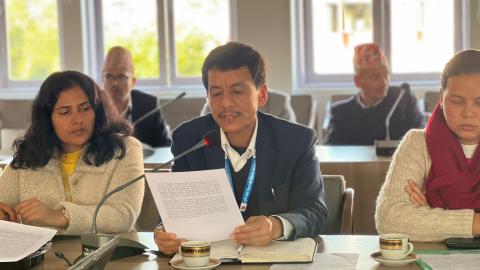
For many involved, the roadmap represents more than a policy document. Young farmers and professionals actively contributed technical input and critical perspectives throughout the process. Reflecting on the handover, young farmer Dipesh Nepal described the roadmap as a milestone in his own journey, highlighting the value of learning alongside senior government officials, researchers, and civil society leaders. The Minister’s explicit commitment to reconnecting youth with agricultural entrepreneurship further reinforced confidence that young people’s contributions will be reflected in future implementation.
Looking ahead
According to MoALD, successful implementation of the roadmap will require strong leadership from federal, provincial, and local governments, combined with the active participation of farmers’ organisations, civil society, NGOs, development partners, and the private sector. Clear frameworks for policy alignment, financing, monitoring and evaluation, and practice-based learning are already embedded within the roadmap.
This inclusive and collaborative process has created a strong sense of shared ownership, which will be essential for translating the roadmap from vision into practice. For the World Future Council, this milestone demonstrates what becomes possible when long-term thinking, participatory governance, and farmer-centred approaches come together. We look forward to accompanying the next phase of dialogue, validation, and implementation as Nepal advances toward a resilient and just agroecological future.