Sri Lanka's National Organic Standard Receives International Recognition
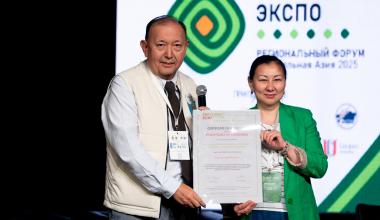
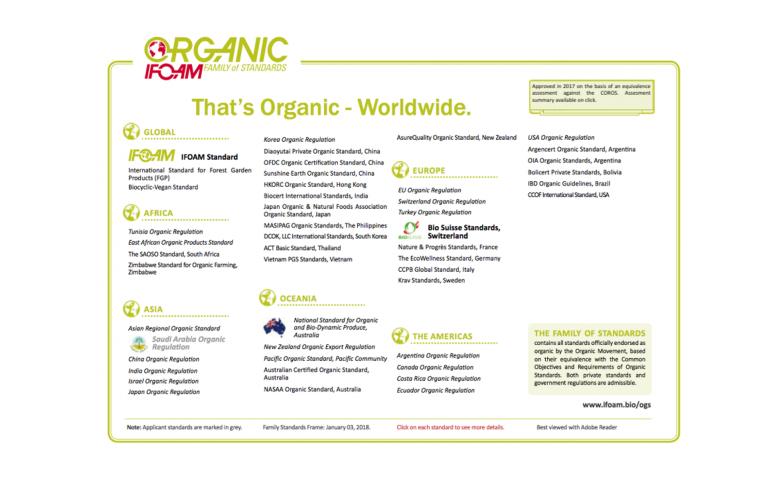
In March 2026, the Sri Lanka national organic standard ("Requirements for Organic Agriculture Production and Processing, Sri Lanka Standard 1324:2025") was officially approved into the IFOAM Family of Standards.
The standard was developed by the Sri Lanka Standards Institution (SLSI) and is licensed to the Sri Lanka Export Development Board. The National Organic Control Unit of the Sri Lankan Development Board (EDB-NOCU) serves as the competent authority for organic agriculture in Sri Lanka.
A Decade of International Cooperation
The approval of the Sri Lanka national organic standard is the result of a decade-long process of international cooperation involving IFOAM – Organics International and several international partners, including GIZ (Deutsche Gesellschaft für Internationale Zusammenarbeit) and the International Trade Centre (ITC), a joint technical cooperation agency of the United Nations and the World Trade Organisation).
Cooperation with Sri Lankan authorities on organic guarantee systems began in 2014. At that time, the SLSI sought technical support from IFOAM – Organics International to eventually secure the national organic standard’s approval into the IFOAM Family of Standards.
Timeline of Key Development (2018-2023)
Between 2018 and 2023, a series of cooperation activities on organic guarantee systems and policy development took place under the GIZ Sri Lanka SME Sector Development Programme:
- 2018: IFOAM – Organics International provided comments on the draft national standard and hosted a Sri Lankan delegation in the framework of a Germany study tour. IFOAM – Organics International also delivered a Policy Workshop in Sri Lanka, and produced a strategic paper, with a series of technical recommendations, for organic sector support.
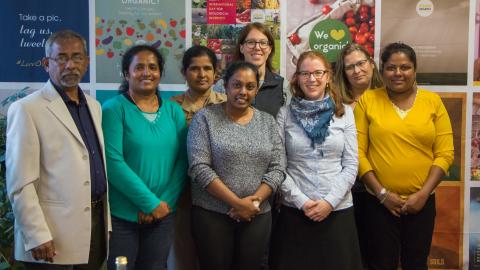
- 2019: Sri Lankan policymakers and sector representatives (including representatives from EDB-NOCU and SLSI) attended a three-day" Organic Policy and Regulation Bootcamp” at the office of IFOAM – Organics International.
- 2022 – 2023: IFOAM – Organics International delivered further training and facilitated stakeholder workshops on organic guarantee systems.
Final Approval and Impact
In 2025, the EDB-NOCU formally applied for the entry into the IFOAM Family of Standards. This final phase was supported by the ITC under the United Kingdom Trade Partnerships Programme funded by the UK government. The programme provided technical advisory to Sri Lankan competent authorities for the review of the country's regulatory system between 2023 and 2026.
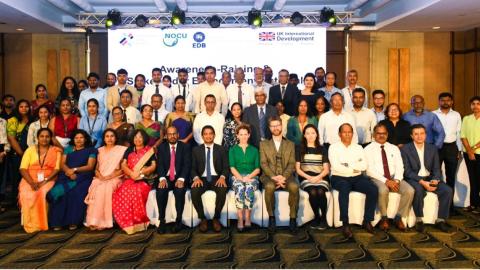
Following an initial equivalence assessment against the Common Objectives and Requirements of Organic Standards (COROS) in 2024, the standard underwent further revision and was officially adopted in December 2025. The newly adopted regulation was re-assessed in early 2026, leading to its official approval in March 2026.
The Sri Lanka national organic standard is one of the few government-led organic standards to include requirements for social justice and the exclusion of nanotechnologies.
IFOAM – Organics International has long been advocating for these inclusions in organic standards. We are delighted that this long-term cooperation has resulted in a standard that not only achieves COROS-equivalence and international recognition but also becomes one of leaders of government standards in its coverage of organic principles.